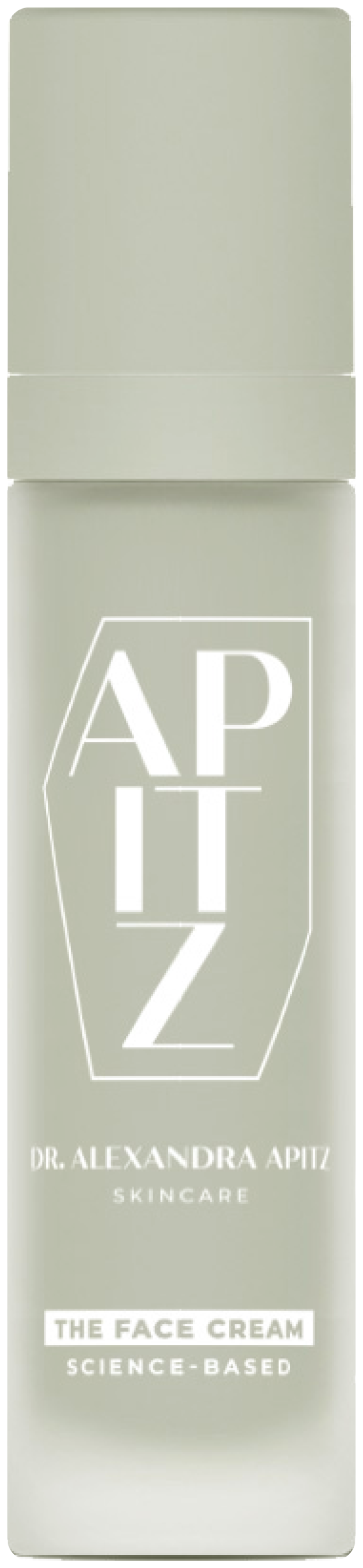
SCIENCE-BASED SKINCARE

MADE IN GERMANY – VEGAN – DERMATOLOGICALLY TESTED!

Our products are developed in Germany with scientific research in mind, clinically tested and sustainably produced. No compromises for your skin.

We make the difference.

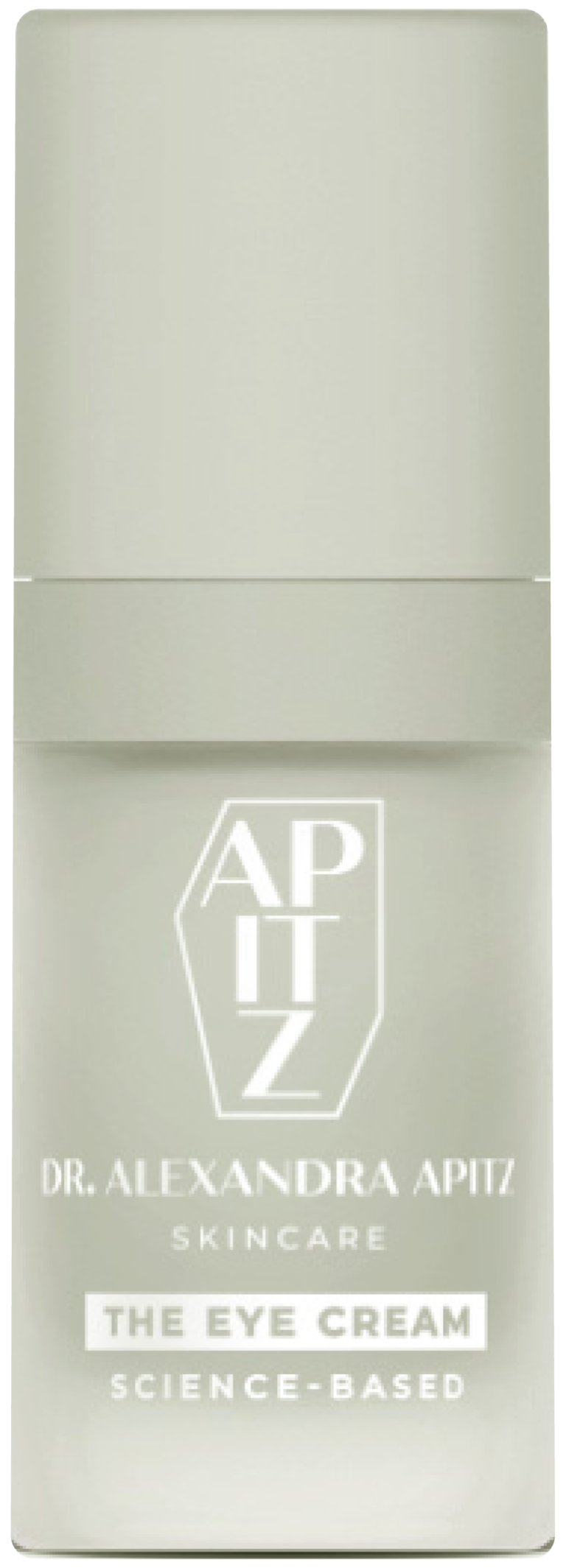
The Eye Cream

Based on our advanced Cell Revitalizing Biocomplex CRB+. Specially developed protection and regenerative properties for your delicate eye area.

THE EYE CREAM
15 ml
Available now
Delivery time: 2–3 working days

€140.00
incl. 19% VAT

FREE SHIPPING

SIGNATURE INGREDIENTS

SIGNATURE INGREDIENTS IN
DR. ALEXANDRA APITZ SKINCARE PRODUCTS:

Cell Revitalizing Biocomplex CRB+.
Our Cell Revitalizing Biocomplex CRB+ is a proprietary formulation that combines key ingredients in a targeted way. A blend of antioxidants such as vitamin E, regenerative and protective ingredients such as raspberry seed oil and peach kernel oil, and five different growth factors forms the foundation of our skincare. Our products also contain other characteristic ingredients, including ectoin, ceramides and ferments.

Signature Ingredients

Acetyl tetrapeptide-5 consists of several amino acids and acts as a signalling molecule. It stimulates biological processes in fibroblasts, which are involved in water retention and collagen synthesis in our skin, for example.

By inhibiting ACE-1, the ingredient improves lymphatic drainage and thus reduces oedema and puffiness, particularly around the eyes.

Studies have shown that acetyl tetrapeptide-5 increases hydroxyproline and elastin levels in
skin fibroblasts, suggesting improvements in the collagen matrix and skin elasticity.

Using it for two to four weeks can already lead to a significant reduction in under-eye bags and an increase in skin elasticity.

Maca peptides are protein fragments from the root of the Peruvian maca plant. The plant grows at altitudes above 4,000 metres and is exposed to extreme climatic conditions. Traditionally, maca is regarded as an energy and vitality booster.

Maca extract reduces the formation of reactive oxygen species (ROS) and lowers prostaglandin release during inflammatory processes. In addition to their antioxidant effect, maca peptides can help regulate skin repair processes by activating the immune system. By stimulating growth factors, maca peptides increase collagen and elastin production in our skin cells, helping to make skin firmer and smoother.

Ceramides are essential lipids (fats) in the skin barrier. Their role within the skin barrier is to reduce transepidermal water loss, helping to maintain the skin’s moisture balance. They also provide a form of defence against external factors such as microorganisms, pollutants and UV radiation. By maintaining the lipid layers in the outermost layer of our skin, they also help keep skin elastic and smooth.

Topical ceramides, applied through skincare products, can compensate for deficiencies in the skin’s own ceramides when correctly formulated.

Increasing ceramide levels through skin creams can support wound healing and reduce inflammatory processes. Medical studies describe improved hydration and reduced redness after several weeks of using creams containing ceramides.

Ectoin is a natural amino acid derivative that has become well established in dermatology and skincare. It comes from microorganisms that can survive under extreme environmental conditions.

Ectoin stabilises cell membranes and protects biomolecules by forming a hydration shell around them. This can provide protection against environmental stressors such as UV radiation and fine particulate matter.

Ectoin also has a strong ability to bind water. It forms so-called ectoin hydro complexes and is therefore considered a long-term moisturiser. This keeps the skin hydrated for up to 24 hours longer. Ectoin has been shown to reduce the formation of reactive oxygen species (ROS) and pro-inflammatory cytokines, which are cellular signalling molecules. It therefore has an anti-inflammatory effect and protects the skin against oxidative stress.

EGF, or epidermal growth factor, is a growth factor naturally present in the body that regulates cell proliferation, differentiation and regeneration in skin tissue.

Studies demonstrate improved wound healing and reduced scarring under the influence of EGF. The EGF complex in my skincare products contains five different growth factors naturally present in the body (IGF-1, EGF, acidic FGF, basic FGF and VEGF), amino acids and vitamins. They stimulate keratinocytes and fibroblasts, supporting skin regeneration. Thanks to its properties, EGF can produce aesthetic effects. It can reduce fine lines, hyperpigmentation and skin laxity, which is why it is often used in skincare.

About 50% of all the hyaluronic acid in the body is found in the skin. Hyaluronic acid can bind many times its own weight in water and acts as a water magnet, helping the skin retain moisture. As a result, skin looks plumper and smoother, and fine lines caused by dryness are visibly softened. An environment rich in hyaluronic acid also reduces scarring and optimises collagen organisation. The molecular size of hyaluronic acid determines its properties. High molecular weight hyaluronic acid often works on the surface, making skin feel smoother immediately. Low molecular weight hyaluronic acid, on the other hand, can penetrate deeper into the skin and provide lasting hydration.

As we age, hyaluronic acid levels in the skin decline significantly, leading to dryness, wrinkles and loss of elasticity. Good skincare products containing hyaluronic acid can partly compensate for this decline and help restore the skin’s structure.

Raspberry seed oil is a cold-pressed oil extracted from raspberry seeds. It contains polyunsaturated fatty acids, mainly omega-3, omega-6 and omega-9. These essential fatty acids strengthen the skin barrier and thereby reduce transepidermal water loss. It contains a high concentration of tocopherols (vitamin E), giving raspberry seed oil considerable potential to protect against oxidative stress caused by free radicals.

Alpha-linolenic acid (omega-3) has demonstrated anti-inflammatory properties and can therefore help reduce inflammation. Antimicrobial activity has even been demonstrated in laboratory studies. Many sources describe raspberry seed oil as providing natural protection against light or UV radiation.

However, this has not been tested using standardised methods, so raspberry seed oil should never be used on its own as UV protection.

The oils in peach kernels closely resemble the composition of the natural oil produced by our sebaceous glands. This explains their excellent skin tolerance and affinity with the skin barrier.

Gentle cold pressing largely preserves valuable natural components of peach kernel oil, such as tocopherols (vitamin E) and polyphenols. These are known for their antioxidant properties.

The vitamin E in peach kernel oil protects against free radicals and slows skin ageing. It also contains linoleic acid, an essential component of ceramides, which is why combining it with additional ceramides in my products creates a wonderful synergy.

Its mild, non-comedogenic properties – meaning it does not clog pores – make peach kernel oil suitable for all skin types. The oil has a particularly regenerative effect after sun exposure or on fine lines caused by dryness.

Phytosqualane is a colourless, odourless plant oil obtained from renewable raw materials – in my case, olives. Its structure closely resembles the squalene naturally present in our skin, making it particularly well tolerated.

It forms a light, silky layer on the skin without feeling greasy. This reduces transepidermal water loss. Phytosqualane therefore helps keep moisture in the skin and reduces flaking and dryness.

Phytosqualane also scavenges free radicals and protects skin lipids against oxidative stress caused by UV radiation or environmental factors. These antioxidant effects are particularly strong when combined with vitamin E, which is why vitamin E is also a signature ingredient in my skincare products.

Recent scientific studies show that fermented soybean extract has promising effects on skin health, particularly in the area of slow ageing.

The fermentation process produces lactic acid metabolites. These lactates stabilise the skin’s pH. Substances with a prebiotic effect reduce redness and skin irritation, supporting the skin’s own microbiome.

Soy ferments stimulate collagen synthesis, improve the skin’s elastic fibres and increase epidermal thickness, helping to reduce wrinkles and skin laxity.

Certain components of soy ferments, such as isoflavones, can inhibit melanin production in skin cells. Regular use can therefore help lighten pigmentation spots or reduce the formation of new ones.

A powerful antioxidant, vitamin E – also known as tocopherol – is one of the best-known active ingredients in skincare. It protects against free radicals caused by factors such as UV radiation, air pollution, stress and smoking. By neutralising these radicals, it slows the skin’s ageing process and delivers its anti-ageing or slow-ageing properties.

Alongside its excellent antioxidant properties, vitamin E stabilises the lipid structure in the skin’s outermost layer, strengthening its natural protective barrier against moisture loss and pollutants.

Vitamin E is, of course, also a signature ingredient in my skin creams and an important part of my Cell Revitalizing Biocomplex (CRB+).

Clean beauty

FREE FROM:

What we leave out

Many conventional creams contain parabens and phthalates, which act as preservatives and are considered hormonally active. Sometimes they are not listed individually but are hidden under the term “Fragrance/Parfum”. Carbomers are often used to improve texture. They are synthetic (plastic) and, as microplastics, are not biodegradable. Other texture enhancers, such as PEG derivatives, can improve how a cream absorbs, but also make the skin more permeable, allowing pollutants to enter more easily. Paraffins (“petrolatum”) are often used as inexpensive fats that can impair the skin's ability to breathe. Other frequently used ingredients include silicones such as cyclopentasiloxane or cyclohexasiloxane. They are used for a soft-focus effect but have a significant environmental impact.

We leave out all ingredients of concern. We do not use microplastics, petroleum-derived substances or non-biodegradable substances (such as PEG compounds).

Our cream also contains no fragrance, as fragrances are the most common cause of intolerance and skin irritation.

It matters to us that our cream contains no ingredients that burden the skin or the environment. Our glass, plastic and paper packaging materials are readily recyclable. We recommend separating the glass from the plastic before disposing of the empty cream bottle.

About us

DR. MED.
ALEXANDRA APITZ

Dr. med. Alexandra Apitz is a specialist in ophthalmology and an expert in aesthetic medicine. Cosmetic eyelid surgery has long been her focus. While studying medicine at Heidelberg University, Dr. Apitz began her doctoral research on stem cells. The research was carried out in close collaboration with the Ethianum, a respected private clinic for aesthetic surgery. Ever since, she has been driven by the question of how treatments might slow cellular ageing or stimulate cell regeneration.

0
0
Basket
Empty basketYour basket is emptyReturn to shop